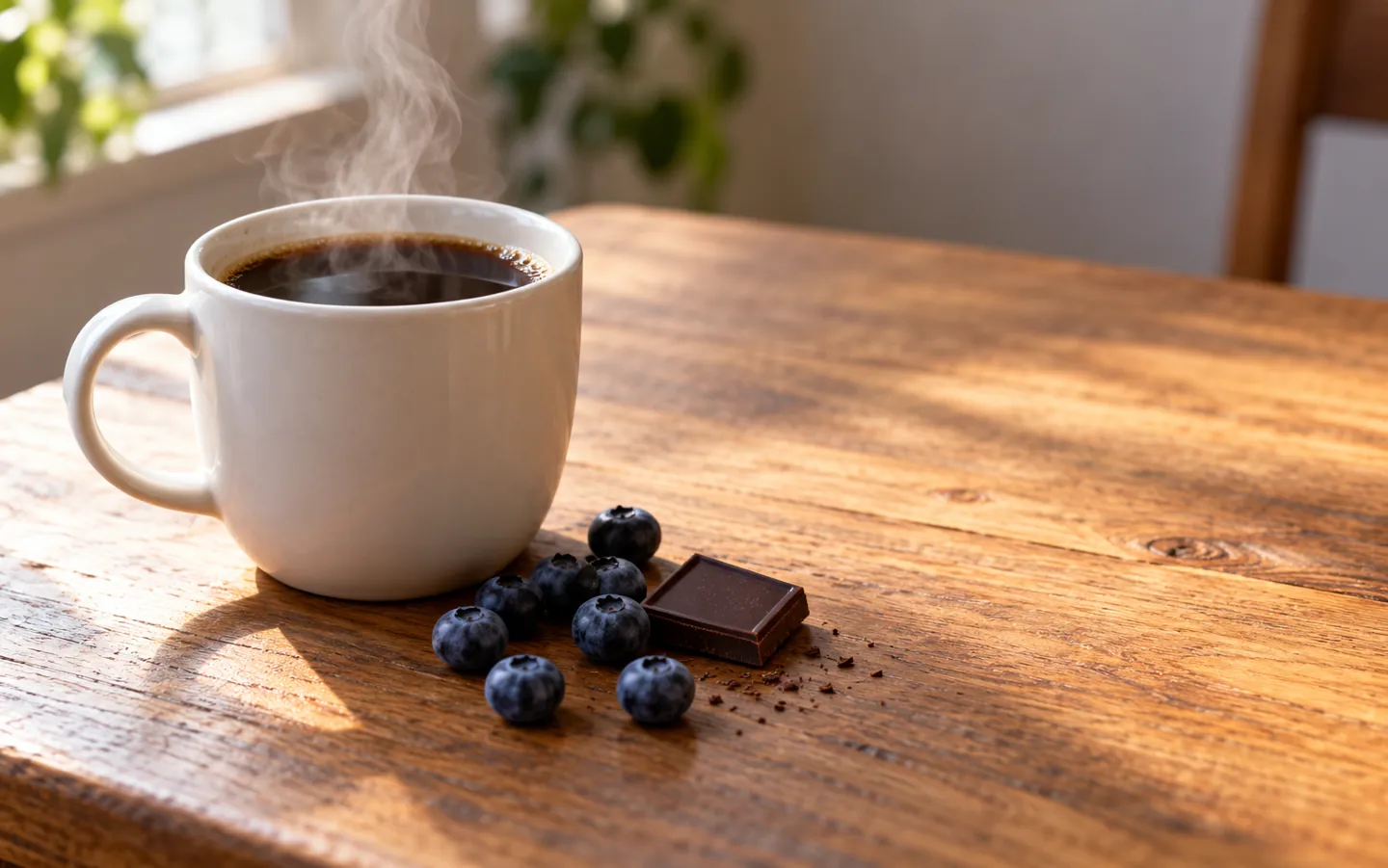
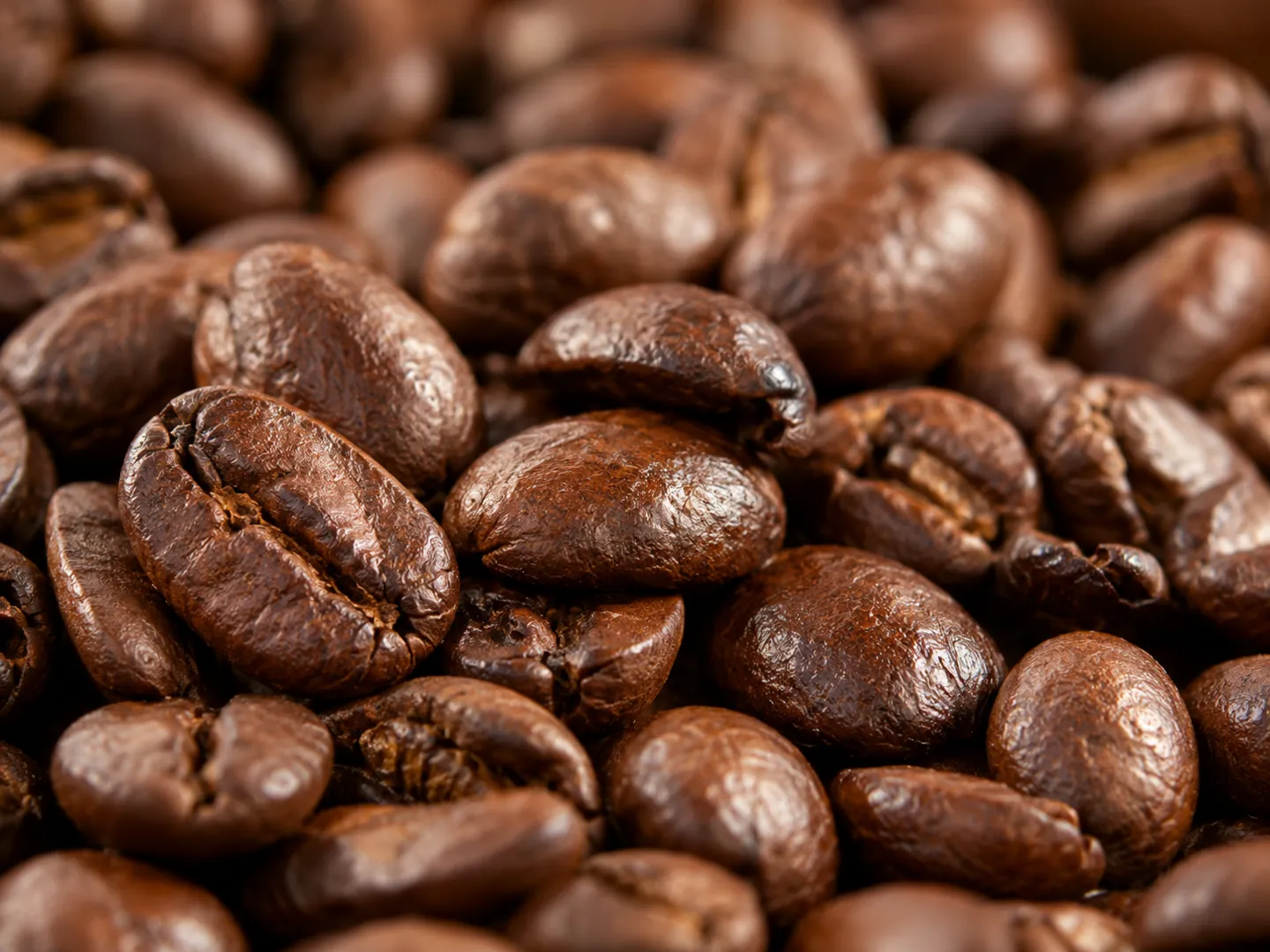
Coffee bags often list flavours that are not ingredients.
Blueberry, dark chocolate, honey: these are descriptions of aroma and taste, borrowed from familiar foods. Coffee science has its own shared vocabulary for them, a lexicon of 110 attributes and a flavour wheel built from it.
The coffee flavour wheel runs from broad categories in the middle to specific notes at the edge. Pick a note to see where it sits. The bar shows how specific it is.
Based on the Coffee Taster's Flavor Wheel structure published by Spencer and colleagues in the Journal of Food Science (2016).
TWO NUMBERS WORTH KNOWING
Many molecules, a few hundred words.
One figure on the chemistry in the cup, one on the vocabulary used to describe it.
1,000+
Volatile compounds identified in the headspace of roasted coffee
Only some have a strong impact on typical coffee aroma, which is why researchers measure their odour activity.
AROMA · CZECH J. FOOD SCI. 2011
110 attributes
Flavour, aroma and texture attributes in the coffee lexicon
Each comes with a reference for measuring its intensity. The lexicon was built at Kansas State University's Sensory Analysis Center.
VOCABULARY · WORLD COFFEE RESEARCH
Sources: Budryn and colleagues, Czech Journal of Food Sciences (2011); World Coffee Research Sensory Lexicon.
FROM LEXICON TO WHEEL
How the words were organised.
The current flavour wheel replaced one first drawn up in 1995. Its layout came from a sorting experiment rather than a committee.
Build a word list
World Coffee Research's lexicon defined coffee's attributes, each with a reference so tasters can calibrate what, say, lime or cardboard means.
Sort the words
72 people, including trained panelists at UC Davis and coffee industry members, sorted 99 attributes into groups of similar flavours without tasting.
Cluster and map
Statistical clustering found 9 main classes, and a similarity map set where each group sits around the wheel.
Train the tasters
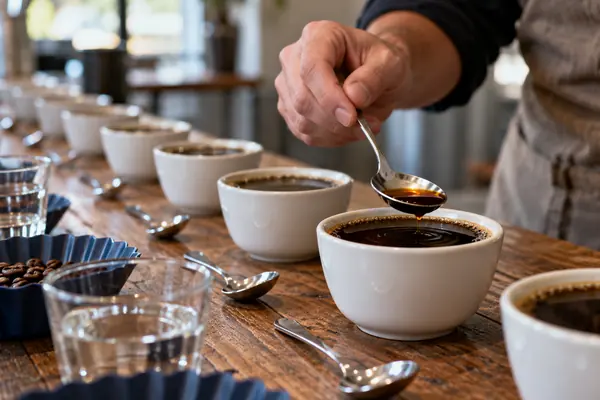
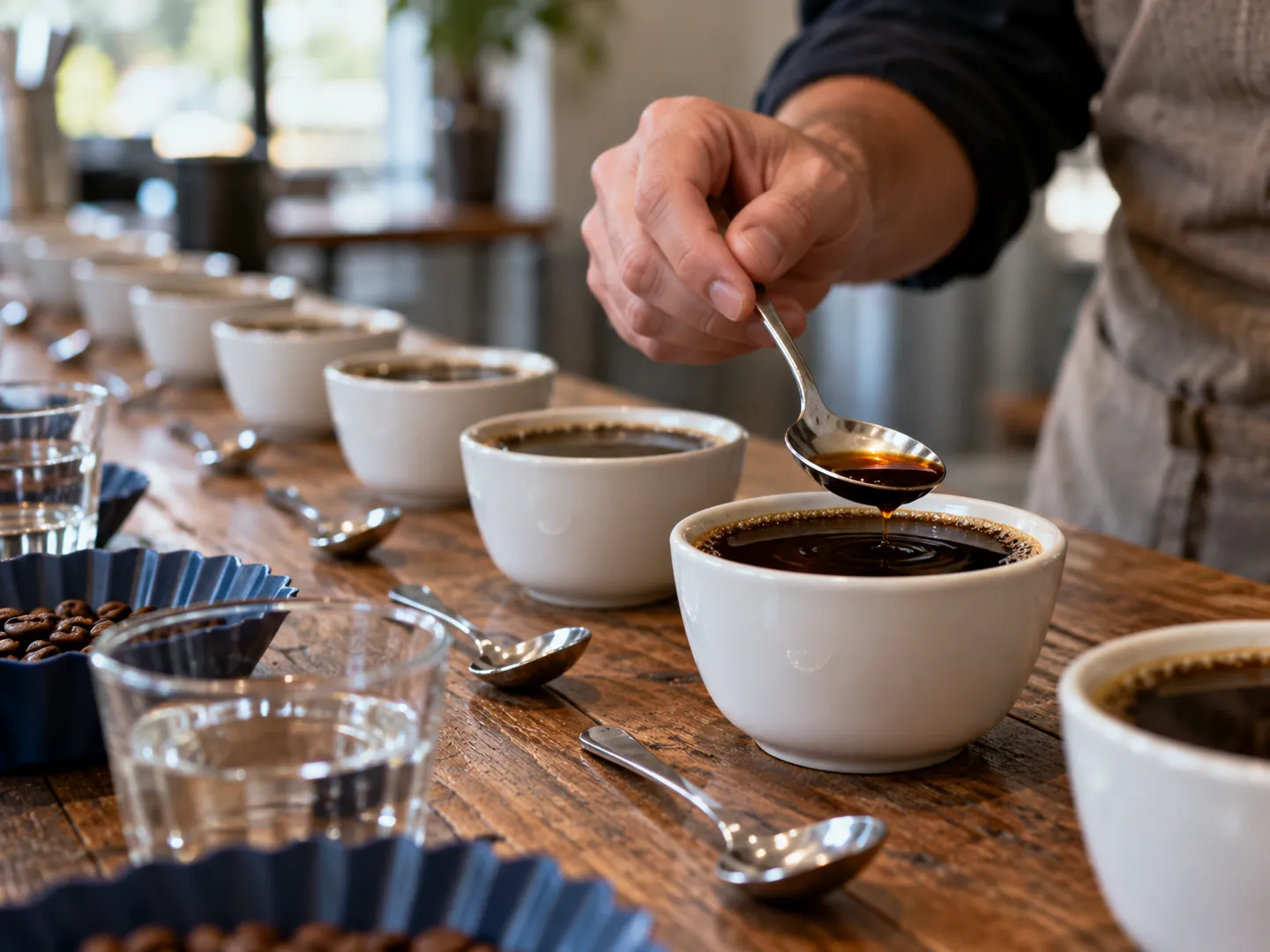
For research, a panel of 5 to 7 tasters trains for six to nine months to score attributes consistently with the lexicon and each other.
AI-generated image, not a photograph of a real person or place.AI-generated image, not a photograph of a real person or place.
WHY IT MATTERS
Words that researchers can use.
World Coffee Research says the lexicon was created so scientists can link flavours to molecules, varieties, farming and processing, and breed coffees that taste better as well as resist disease and climate change.
The 2016 wheel itself was designed as a communication tool for everyone from producers and roasters to baristas and consumers, so a note on a bag and a note in a lab can share the same word.
Questions
Questions people ask
Is there blueberry in coffee that lists blueberry notes?
Tasting notes describe what a coffee tastes or smells like. The World Coffee Research lexicon calls itself purely descriptive: it lets tasters say a coffee resembles blueberry and how strongly, not that fruit was added.
Where do coffee flavours come from?
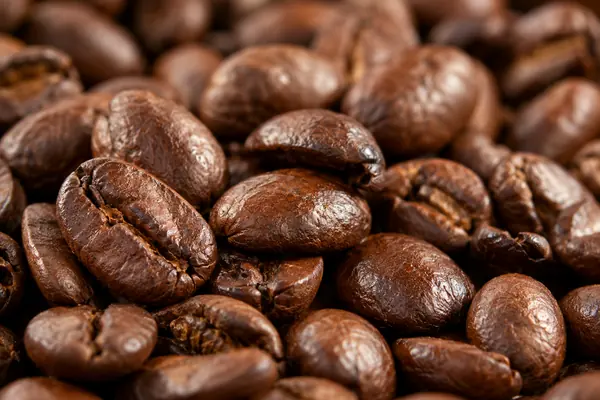
From the compounds in the roasted bean. More than 1,000 volatile compounds have been identified in the air above roasted coffee, and only some have a strong impact on its typical aroma.
What is the coffee flavour wheel?
A chart of coffee flavour words, from broad categories in the centre to specific notes at the edge. The current Coffee Taster's Flavor Wheel, published in 2016, replaced a 1995 original.
How do professional tasters agree on flavours?
Research panels use the lexicon's references and a 15-point intensity scale, training for six to nine months so that tasters in different places give the same score for the same coffee.
Why do some notes sound unpleasant?
The lexicon and wheel describe all of coffee's flavours, not only good ones. It includes notes such as cardboard, musty, rubber and petroleum alongside fruit, sugar and spice.